


Overview
Perhaps the most fascinating aspect of the current research on closed timelike curves (CTCs) is that there is more than one way to treat them with quantum mechanics to a sufficient degree of plausibility. While none of the established quantum models (sometimes called prescriptions) has been accepted by scientific consensus as the authoritative description of how the Universe may potentially conduct antichronological time travel, all of them can be used to predict evolutions of the time-travelling quantum systems associated with CTCs. Though these predictions often disagree in stark ways, their differences can also be subtle, which may likewise be true for any number of the prescriptions’ other aspects, including their mathematical characteristics (such as [non-]linearity and [non-]unitarity in state evolution) and physical consequences (such as the abilities to distinguish non-orthogonal states, clone arbitrary states, signal superluminally, and increase the computational speed and efficiency of both classical and quantum computers). A major part of the research into the various prescriptions therefore is how, despite being formulated with radically distinct (and usually fundamentally incompatible) postulates, they all provide self-consistent, paradox-free evolutions of quantum systems near CTCs (including resolutions to temporal paradoxes), with the associated quantum states themselves always being physically valid, at least in the sense of standard quantum mechanics.
In the absence of physical CTCs on which to perform experiments, one of the more effective ways to investigate the various quantum models of time travel is to compare their theoretical predictions for the states of the quantum systems both internal (chronology-violating, or CV) and external (chronology-respecting, or CR) to a CTC in the context of specific inter-system interactions. Doing so however can prove to be both tedious and error-prone, especially in cases where the interactions are complex. For example, Deutsch’s model (giving Deutschian CTCs, or D-CTCs) necessitates the solving of a fixed-point condition for which there is often a parametrized spectrum of (non-unique) CV solutions (and, accordingly, a corresponding spectrum of CR solutions). Similarly, the theory of postselected teleportation (giving postselected CTCs, or P-CTCs) requires one to non-unitarily evolve input states and subsequently renormalize the results. Needless to say, the procedures for computing the predictions of these prescriptions are highly involved, and so must be performed with great care.
Born out of the desire for a way to programmatically compute the states of the CR and CV systems according to the foremost quantum prescriptions of antichronological time travel, Qhronology [1] was created as a unified computational environment for defining, simulating, and analyzing quantum information processes that incorporate CTCs. Notably, the package can be used to calculate quantum resolutions to any given temporal paradox, thereby enabling users to explore foundational questions regarding the quantum mechanics of time travel. By providing a unique approach to describing general quantum objects (such as states and gates), Qhronology can also operate as a complete quantum circuit simulator, of which a prominent component is its engine for the visualization of quantum circuit diagrams. Its main features include:
Calculation of the states of the CR and CV quantum systems according to quantum-mechanical prescriptions of closed timelike curves
Deutsch’s model (D-CTCs)
Postselected teleportation (P-CTCs)
Simulation of general quantum information processing and computation
Symbolic calculations involving any number of variables and parameters
Numerical (classical) replication of quantum experiments
Visualization of quantum circuit diagrams
Text-based semigraphical diagrams constructed from fixed-width typefaces
The primary purpose of Qhronology is to facilitate the study of quantum models of antichronological time travel and quantum algorithms of quantum computing in both educational and research capacities. As part of this, the project aims to make the expression of quantum states, gates, circuits, and models of CTCs near-limitlessly possible within a framework that is syntactically simple yet computationally powerful. Qhronology therefore provides a sufficiently complete and self-contained set of tools with the intention that needing to use external packages and libraries to perform transformations on its quantum constructs should not (usually) be necessary. Its underlying mathematical system accomplishes this using the standard \(\Dimension\)-dimensional matrix mechanics of discrete-variable quantum theory in a general \(\Complexes^\Dimension\)-representation.
Qhronology is written entirely in the Python programming language. Being high-level, dynamically type-checked, and interpreted (at least within the context of its CPython reference implementation), Python is well-suited for building an accessible framework that emphasizes interactivity and scriptability. Additionally, like any popular language, it has both an extensive standard library and a plethora of powerful community packages available to it. Qhronology is built around features from two such packages: the eminent SymPy and NumPy projects. In particular, the package greatly leverages the symbolic and linear algebra capabilities of the former, and so aims to have a deep compatibility with SymPy and its matrix objects. It is therefore hoped that users who possess experience with these projects find Qhronology’s interface to be intuitive.
Note
Qhronology, in its current form, is considered to be highly experimental. Its output may not always be correct, and some features may not work as intended. Additionally, please note that all components of the package, including its functions, methods, classes, modules, and subpackages, may be subject to change in future versions.
Features#
Quantum computing simulations#
Designed to provide a powerful set of features with a simple and intuitive syntax, Qhronology facilitates the simulation of quantum computation, information processing, and algebraic calculations.

Quantum resolutions to antichronological time-travel paradoxes#
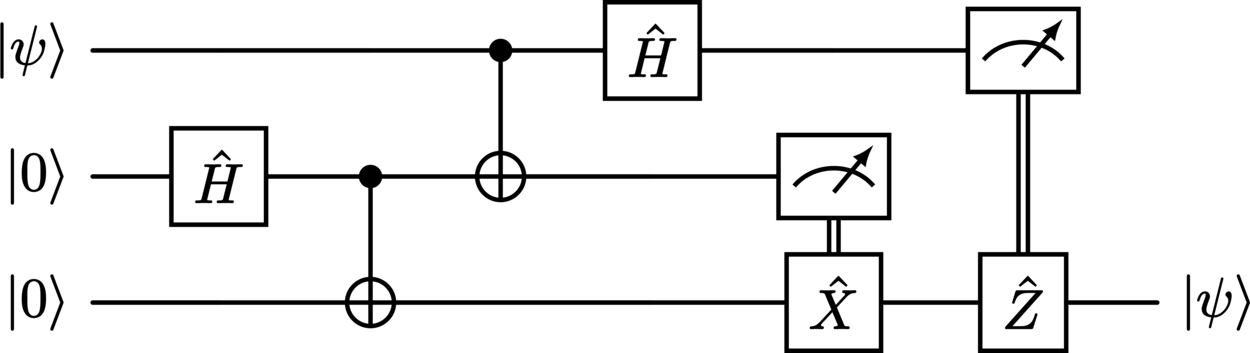
The fundamental indeterminism of quantum mechanics can be leveraged to provide resolutions to quantum formulations of classic time-travel paradoxes (such as the infamous grandfather paradox). A select few prescriptions by which this may be achieved, including Deutsch’s model (D-CTCs) and the postselected teleportation prescription (P-CTCs), are implemented both as bare functions and class methods.

Quantum circuit visualization#
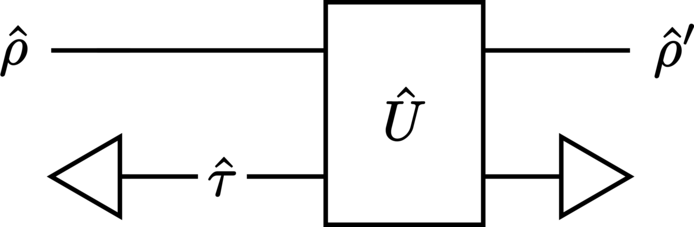
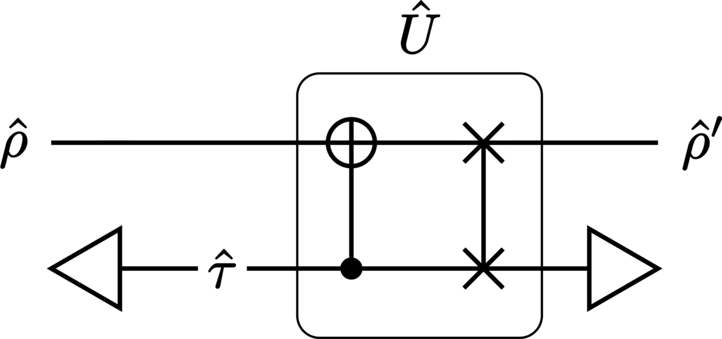
Quantum circuit diagrams provide a powerful picturalism through which a quantum process can be visualized as a network of quantum logic gates connected by wires. Qhronology provides this functionality for any such processes constructed using its built-in classes.

Numerous examples#
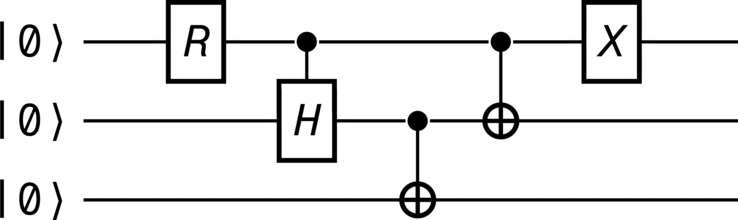
Bundled with the project is a collection of complete examples that showcase its capabilities and syntax. This includes both implementations of canonical quantum algorithms and exotic circuits that use quantum mechanics to resolve paradoxical scenarios of antichronological time travel.

Extensive documentation#
All of the objects in each of the various submodules have been rigorously detailed in their respective sections within the documentation. This includes multiple examples of usage for each, aiding the user’s understanding of every available feature.

Foundational theory#
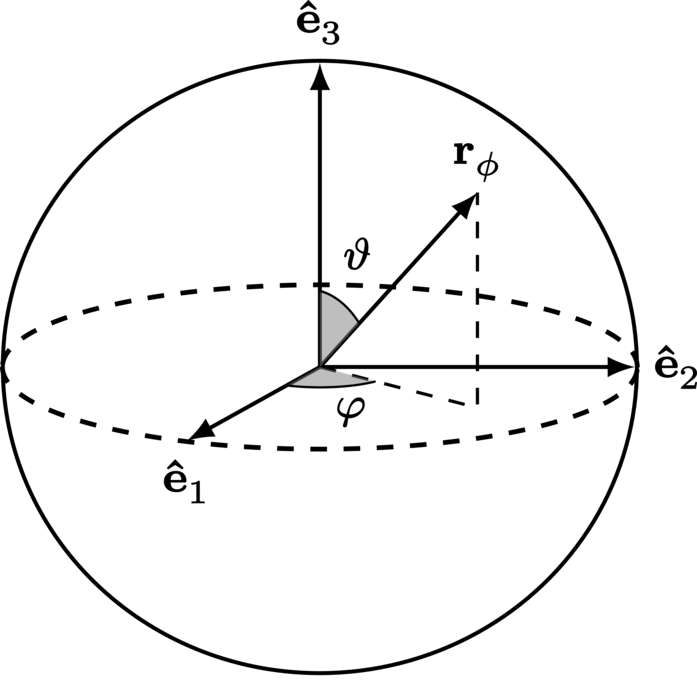
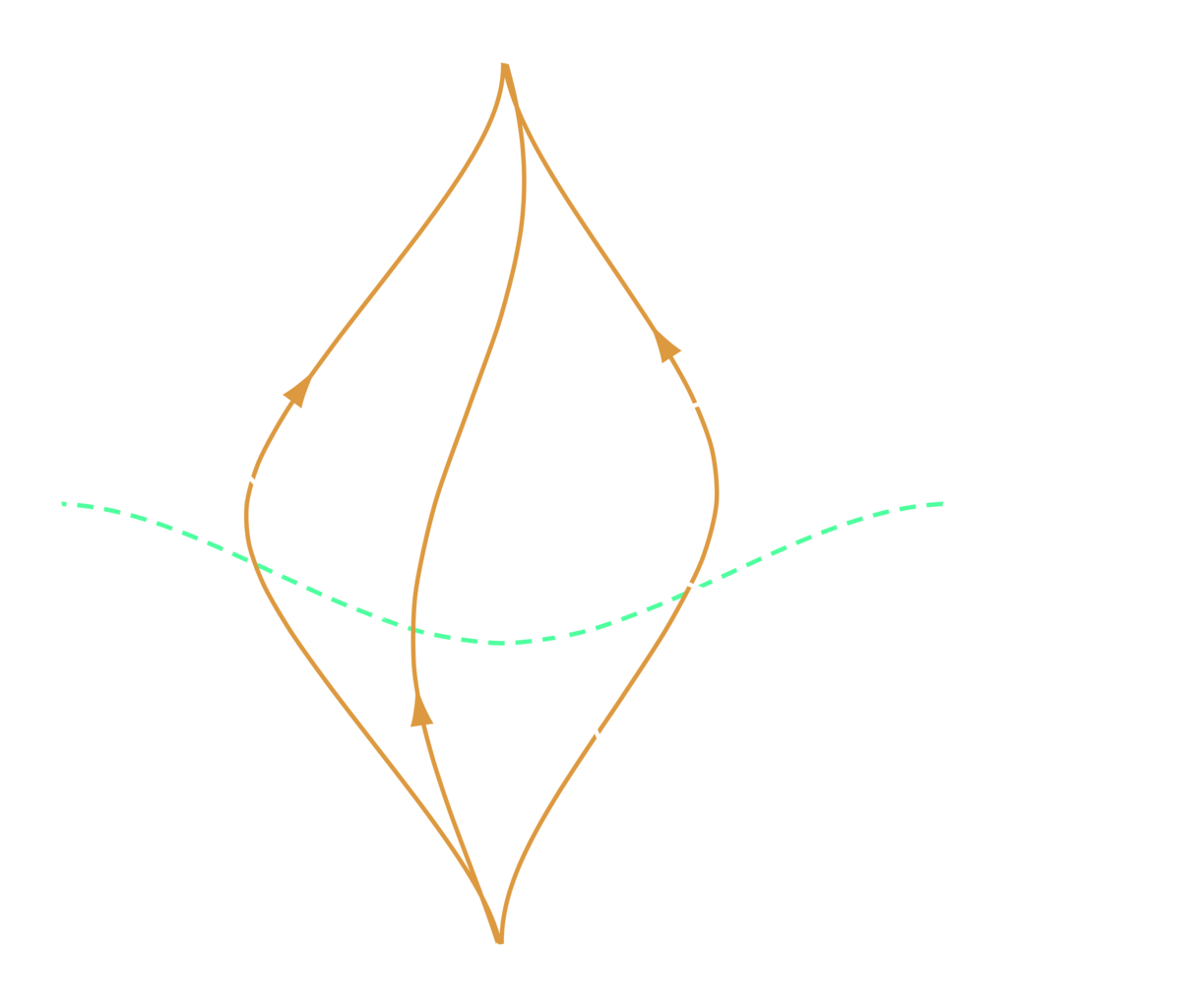
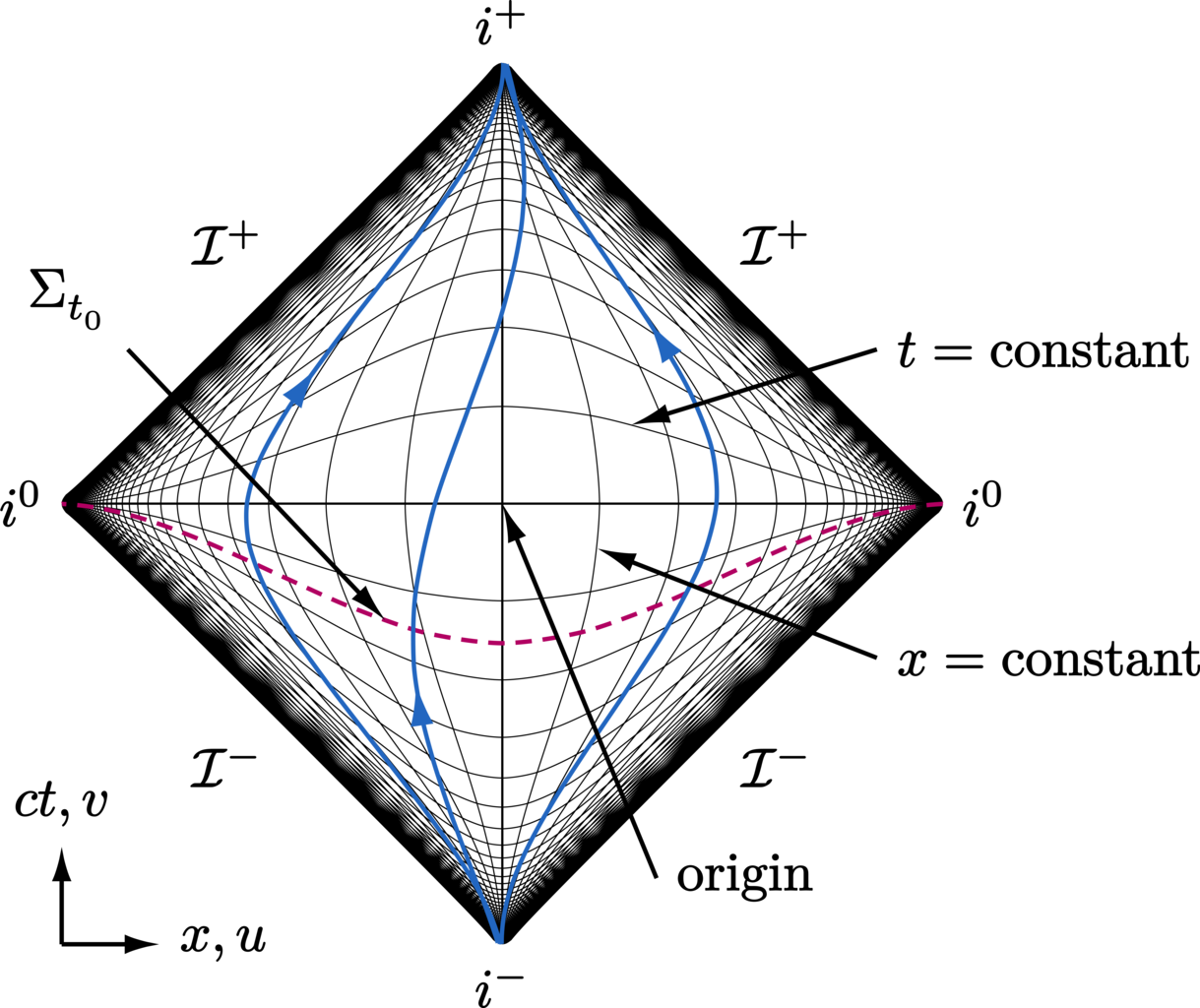
All of the underlying mathematics upon which Qhronology is built is presented as a series of pedagogical reference articles within the documentation. This includes sections on the mathematical foundations of quantum mechanics (Hilbert spaces, linear operators, composite systems, etc.), quantum theory on both discrete and continuous Hilbert spaces, a brief overview of the quantum circuitry picturalism, and physical theories of time travel (both classical and quantum).
Package installation and structure#
Local installation of Qhronology from PyPI can be accomplished using a Python package manager, such as pip, via your operating system’s command line, e.g.,
$ pip install qhronology
You may also be able to use an alternative package manager of your choice.
After installation, Qhronology can be imported in Python in the standard way. One suggestion is as follows:
import qhronology as qy
The package has the following directory structure:
qhronology
├──quantum
│  ├──circuits.py
│  ├──gates.py
│  ├──prescriptions.py
│  └──states.py
├──mechanics
│  ├──matrices.py
│  ├──operations.py
│  └──quantities.py
└──utilities (intended for internal use only)
   ├──classification.py
   ├──diagrams.py
   ├──helpers.py
   ├──objects.py
   └──symbolics.py
Requirements#
Within the package and documentation, SymPy and NumPy are imported in their conventional manners:
import sympy as sp
import numpy as np
Qhronology is compatible with the following versions (from requirements.txt):
sympy>=1.12
numpy>=1.26
These are the earliest versions with which the current release has been tested, but older versions may also be compatible. It also requires:
python>=3.11
Examples#
Generation of a Bell state#
Generation of the \(\ket{\Bell^+}\) Bell state from primitive \(\ket{0}\) states:
from qhronology.quantum.states import VectorState
from qhronology.quantum.gates import Hadamard, Not
from qhronology.quantum.circuits import QuantumCircuit

# Input
zero_state = VectorState(spec=[(1, [0])], label="0")

# Gates
HI = Hadamard(targets=[0], num_systems=2)
CN = Not(targets=[1], controls=[0], num_systems=2)

# Circuit
generator = QuantumCircuit(
    inputs=[zero_state, zero_state],
    gates=[HI, CN],
)
generator.diagram()

# Output
phi_plus = generator.state(label="Φ+")

# Results
phi_plus.print()
>>> generator.diagram()

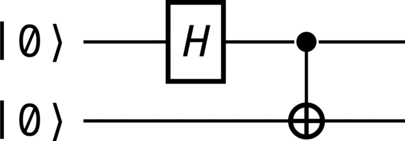
>>> phi_plus.print()
|Φ+⟩ = sqrt(2)/2|0,0⟩ + sqrt(2)/2|1,1⟩
Quantum teleportation#
Quantum teleportation of an arbitrary qubit \(\ket{\psi} = a\ket{0} + b\ket{1}\):
from qhronology.quantum.states import VectorState
from qhronology.quantum.gates import Hadamard, Not, Measurement, Pauli
from qhronology.quantum.circuits import QuantumCircuit
from qhronology.mechanics.matrices import ket

# Input
teleporting_state = VectorState(
    spec=[["a", "b"]],
    symbols={"a": {"complex": True}, "b": {"complex": True}},
    substitutions=[("a*conjugate(a) + b*conjugate(b)", 1)],
    label="ψ",
)
zero_state = VectorState(spec=[(1, [0, 0])], label="0,0")

# Gates
IHI = Hadamard(targets=[1], num_systems=3)
ICN = Not(targets=[2], controls=[1], num_systems=3)
CNI = Not(targets=[1], controls=[0], num_systems=3)
HII = Hadamard(targets=[0], num_systems=3)
IMI = Measurement(
    operators=[ket(0), ket(1)],
    observable=False,
    targets=[1],
    num_systems=3,
)
MII = Measurement(
    operators=[ket(0), ket(1)],
    observable=False,
    targets=[0],
    num_systems=3,
)
ICX = Pauli(index=1, targets=[2], controls=[1], num_systems=3)
CIZ = Pauli(index=3, targets=[2], controls=[0], num_systems=3)

# Circuit
teleporter = QuantumCircuit(
    inputs=[teleporting_state, zero_state],
    gates=[IHI, ICN, CNI, HII, IMI, MII, ICX, CIZ],
    traces=[0, 1],
)
teleporter.diagram(force_separation=True)

# Output
teleported_state = teleporter.state(label="ρ")

# Results
teleporting_state.print()
teleported_state.print()
>>> teleporter.diagram(force_separation=True)

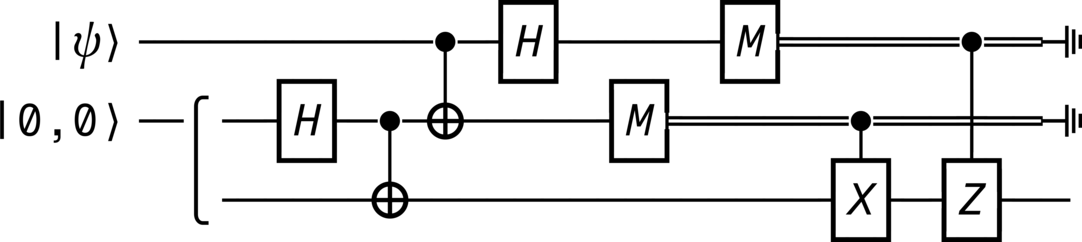
>>> teleporting_state.print()
|ψ⟩ = a|0⟩ + b|1⟩
>>> teleported_state.print()
ρ = a*conjugate(a)|0⟩⟨0| + a*conjugate(b)|0⟩⟨1| + b*conjugate(a)|1⟩⟨0| + b*conjugate(b)|1⟩⟨1|
Unproven-theorem paradox#
Computing resolutions to the unproven-theorem paradox according to various prescriptions of quantum time travel (D-CTCs and P-CTCs):
from qhronology.quantum.states import VectorState
from qhronology.quantum.gates import Not, Swap
from qhronology.quantum.prescriptions import QuantumCTC, DCTC, PCTC

# Input
mathematician_state = VectorState(spec=[(1, [0])], label="0")
book_state = VectorState(spec=[(1, [0])], label="0")

# Gates
NIC = Not(targets=[0], controls=[2], num_systems=3)
CNI = Not(targets=[1], controls=[0], num_systems=3)
IS = Swap(targets=[1, 2], num_systems=3)

# CTC
unproven = QuantumCTC(
    inputs=[mathematician_state, book_state],
    gates=[NIC, CNI, IS],
    systems_violating=[2],
)
unproven.diagram()

# Output
# D-CTCs
unproven_DCTC = DCTC(circuit=unproven)
unproven_DCTC_CR = unproven_DCTC.state_respecting(label="ρ_D")
unproven_DCTC_CV = unproven_DCTC.state_violating(label="τ_D")

# P-CTCs
unproven_PCTC = PCTC(circuit=unproven)
unproven_PCTC_CR = unproven_PCTC.state_respecting(label="ψ_P")
unproven_PCTC_CV = unproven_PCTC.state_violating(label="τ_P")
unproven_PCTC_CR.normalize()

# Results
unproven_DCTC_CR.print()
unproven_DCTC_CV.print()
unproven_PCTC_CR.print()
unproven_PCTC_CV.print()
>>> unproven.diagram()

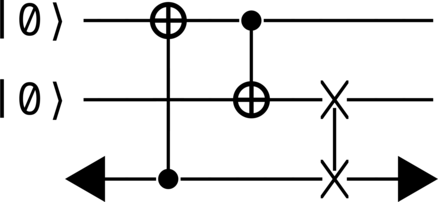
>>> unproven_DCTC_CR.print()
ρ_D = g|0,0⟩⟨0,0| + (1 - g)|1,1⟩⟨1,1|
>>> unproven_DCTC_CV.print()
τ_D = g|0⟩⟨0| + (1 - g)|1⟩⟨1|
>>> unproven_PCTC_CR.print()
|ψ_P⟩ = sqrt(2)/2|0,0⟩ + sqrt(2)/2|1,1⟩
>>> unproven_PCTC_CV.print()
τ_P = 1/2|0⟩⟨0| + 1/2|1⟩⟨1|
Documentation#
The latest version of the documentation for the package is available at:
The official website: https://qhronology.org
The official PDF document: Qhronology.pdf
Both of these are built using Sphinx (repository), with their shared source files residing within the docs directory at the root of the project’s repository. This includes all project text and artwork. Please see shell-sphinx.nix within that directory for a list of dependencies required to build both documentation targets. Note that a full LaTeX system installation from 2024 or later is required to build the project’s PDF documentation, figures, and artwork (including the logo). Also note that the documentation’s rendered circuit diagrams (generated from the package itself) are created using a custom LaTeX template (render-text.tex) and associated shell script (render-text.sh).
License#
Package#
The Qhronology package (including any distributions, both source and built, and its source code) is dual-licensed, and you may only use it under the terms of a relevant license agreement. The particular one which applies to you depends on your use of the package and can be summarized as follows:
Non-commercial use: You are free to copy, distribute, and transmit Qhronology for non-commercial purposes. Non-commercial use is subject to the terms of version 3.0 of the GNU Affero General Public License (AGPL-3.0-or-later). Redistribution of the software in accordance with this license must only be done under the same non-commercial terms. The AGPL in its entirety can be viewed online at https://www.gnu.org/licenses/agpl-3.0.html. A copy of the license is also included with the project’s source code: AGPL-3.0-or-later.txt.
Commercial use: Any use of Qhronology for a commercial purpose is subject to and requires a special license. If you intend to use the package in such a manner, contact lgbishop@protonmail.com to arrange a license agreement.
Guidelines on distinguishing use#
Whether a particular use of Qhronology is considered to be either “non-commercial” or “commercial” depends on the use, not the user, and some guidelines are set out below:
Non-commercial use is anticipated to primarily involve students and teachers who may wish to use Qhronology at home and/or an accredited academic institution (e.g., school, university, etc.) for the purpose of education, without intending to seek any commercial advantage or financial gain. This includes teachers in schools and universities where tuition fees are charged, so long as the use of Qhronology is limited to personal or individual classroom teaching or public academic research.
Commercial use is anticipated to primarily involve publishers, online schools, online universities, and other organizations (both for-profit and non-profit) who wish to use Qhronology to support activities that are intended toward securing a commercial advantage or the generation of revenue or monetary compensation. This includes, but is not limited to, any of the following:
The use of Qhronology (and its source code) to generate or develop educational materials or resources which will be sold in exchange for a fee (including course or tuition fees) or (if given away for free) which are used to gain a commercial advantage for the user.
The provision of training, support or editorial services that use or reference Qhronology in exchange for a fee.
The use of Qhronology (and its source code) within a non-academic ebook, textbook, or journal, whether or not the publication is distributed for a fee. Please note that the use of Qhronology in publicly available academic papers and conferences is considered to be non-commercial use and so does not require a commercial license agreement.
The use of Qhronology (and its source code) to assist in securing advertising or sponsorship revenues.
The use of Qhronology (and its source code) for training machine learning models or artificial intelligence systems, including its incorporation into any dataset used for such purposes.
Documentation#
The Qhronology project’s accompanying documentation, including its text, images, scripts, code snippets, compiled outputs (e.g., PDF and HTML), and source files, are published under the CC-BY-NC-ND-4.0 license. For more information about your rights and restrictions under this license, please visit https://creativecommons.org/licenses/by-nc-nd/4.0/. A copy of the license is provided with the project’s source code: CC-BY-NC-ND-4.0.txt.
Other#
External assets licensed for distribution with the project as part of its documentation (in both PDF and HTML formats) consist of the following:
Fonts — applicable fonts are redistributed (vendored and embedded) as per their SIL Open Font License 1.1: OFL-1.1.txt
MathJax — redistributed (vendored) as per its Apache License 2.0: Apache-2.0.txt
three.js — redistributed (vendored) as per its MIT License: MIT.txt
Pyodide — redistributed (vendored) as per its Mozilla Public License 2.0: MPL-2.0.txt
SymPy and NumPy — redistributed (vendored) as per their respective licenses (both derivatives of the BSD-3-Clause License): SymPy.txt and NumPy.txt
Contributing#
Contributions to Qhronology (including both the package and its documentation) in the form of features, fixes, or even suggestions, are welcome provided they are compatible with the project’s concept and vision, while also conforming to its style. Please see below for more details about contributing to the project. Feel free to contact lgbishop@protonmail.com to discuss any significant additions or changes you wish to propose.
Contributor license agreement (CLA)#
The nature of Qhronology’s dual-licensing structure means that the legal requirements of contributors (and their contributions) to the project are different, and more complex, than those of ordinary permissive and copyleft licenses. The intention of this licensing scheme is to maintain a project that is both free and open for non-commercial use (both private and public), while simultaneously placing stronger restrictions and limits on commercial use. Please note however that Qhronology will always be free and open for non-commercial use.
As a result, contributors are required to accept a contributor license agreement (CLA) for each contribution to the project. The CLA constitutes a legal agreement between contributors and the project that mainly exists to facilitate the transfer of copyright of the work contained in contributions to the project. This is necessary for the project, made available for non-commercial use under the AGPL, to protect its ability to be distributed for commercial use under non-AGPL terms. Importantly, this does not remove the credit for any contributions, and care will be taken to make proper attribution when and where it is appropriate.
Acceptance of the CLA is achieved by reading the document itself (CLA.txt), and then declaring your agreement to its terms and conditions by reproducing, in the description of any merge requests to the project’s repository, the following statement:
[ ] I declare that I have read Qhronology's Contributor License Agreement and agree to its terms and conditions.
The box must be checked, which can be accomplished by replacing the empty space within the square brackets with a lowercase “x” character. Failure to do so may result in your contribution being rejected. If accepted, please note that the CLA is irrevocable. Note also that sufficiently small contributions (such as minor bug fixes or typographical error fixes) need not be accompanied by a CLA declaration as such changes are small enough to not be copyrightable.
Copyright#
The Qhronology project is committed to making contributions available as free and open-source software (FOSS) under an OSI-approved license of some form. Currently, this is achieved by offering the project as free for non-commercial use with the GNU Affero General Public License v3.0 (AGPL-3.0-or-later). The main reason of the CLA therefore is that Qhronology needs permission from contributors in order to be able to redistribute their contributions under a non-AGPL license. Accepting the CLA is simply a way of legally declaring that you have both the necessary ownership of the contributions and actually do grant the project the rights to use them. Such contributions include adding to or changing any of the project’s following facets:
code
graphics (including figures, icons, and artwork)
documentation (including text, code examples, and equations)
Simultaneously, Qhronology reserves the right to, at any time:
change the project’s licensing model (including the licenses themselves)
reassign copyright of the project
modify or delete any past contributions to the project
change the Terms and Conditions in the CLA
If any of these actions are performed, the conditions of the agreement at the time of acceptance of the CLA will not change.
Citation#
The package itself:
@software{bishop_qhronology-software_2025,
  title = {Qhronology: {{A Python}} package for studying quantum models of closed timelike curves and simulating general quantum information processing \& computation},
  author = {Bishop, Lachlan G.},
  year = 2025,
  month = jun,
  url = {https://github.com/lgbishop/qhronology},
  addendum = {Source code: \url{https://github.com/lgbishop/qhronology}}
}
The project’s documentation:
@misc{bishop_qhronology-documentation_2025,
  title = {Qhronology: {{Documentation}}, {{Examples}}, and {{Theory}}},
  author = {Bishop, Lachlan G.},
  year = 2025,
  month = jun,
  url = {https://github.com/lgbishop/qhronology/blob/latest/docs/_build/latex/Qhronology.pdf},
  addendum = {Available online: \url{https://qhronology.org}}
}
The project’s technical paper:
@misc{bishop_qhronology_2026,
  title = {Qhronology: {{A Python}} package for studying quantum models of closed timelike curves},
  author = {Bishop, Lachlan G.},
  year = 2026,
  month = jan,
  number = {arXiv:2601.17459},
  primaryclass = {quant-ph},
  publisher = {arXiv},
  doi = {10.48550/arXiv.2601.17459},
  url = {https://arxiv.org/abs/2601.17459}
}
Possible future work#
Package:
Write proper (formal) unit tests.
Permit more intuitive usage (i.e., summation and multiplication) of quantum objects via operator overloading.
Tighter integration with SymPy’s
pprint()functionality for enhanced state and gate printing.Implement T-CTCs (the transition-probabilities quantum model of time travel).
Add the ability for circuit visualizations to target Quantikz LaTeX output.
Automatically rasterize using available (local) LaTeX installation.
Add the ability to label a circuit’s output systems.
Implement the permutation (PERM) gate.
Add the ability for circuits to be optimized (to reduced gate depth).
Add the ability for circuits and/or gates to be decomposed (using a specified gate set).
Add the ability to use custom styles in the circuit diagram visualization.
Make the labelling/notation functionality more robust and extensible.
Investigate the addition of an ability to compile simple Qhronology programs to OpenQASM.
Documentation:
More examples!
Theory:
Expand section on the Cauchy problem near CTCs.
Add a section on the general theory of relativity and the associated geometric theories of CTCs.
References
L. G. Bishop, “Qhronology: A Python package for studying quantum models of closed timelike curves and simulating general quantum information processing & computation”, 2025. URL: https://qhronology.org, Source code: lgbishop/qhronology